

Landscape design pricing in Boulder County depends on size, slope, soil, materials, irrigation, and features. Here is what moves the number, what Boulder's code may add, and how to plan without surprises.


Lorem ipsum dolor sit amet, consectetur adipiscing elit. Suspendisse varius enim in eros elementum tristique. Duis cursus, mi quis viverra ornare, eros dolor interdum nulla, ut commodo diam libero vitae erat. Aenean faucibus nibh et justo cursus id rutrum lorem imperdiet. Nunc ut sem vitae risus tristique posuere.
Homeowners in Boulder often ask what a landscape design costs before they have shared a single detail about the yard. That is a fair question, but the answer depends on what is on your lot. Green Landscape Solutions has designed and built landscapes across Boulder County since 2002, with more than 1,000 completed projects. This post explains what goes into the price, so you can compare proposals with clear eyes.
There is no standard price. Two Boulder yards of the same size can differ widely once slope, drainage, soil, and materials are counted. A reliable figure comes from a site visit and a written proposal. Be cautious of any online number quoted without seeing your property.
Green Landscape Solutions offers free initial consultations. After that, a designer prepares a proposal for design services, which you sign and return with a retainer to begin. We do not publish a flat design fee here because it varies by project.
Six factors do most of the work. Each one changes how much design time a yard needs and how much it costs to build what the design shows.
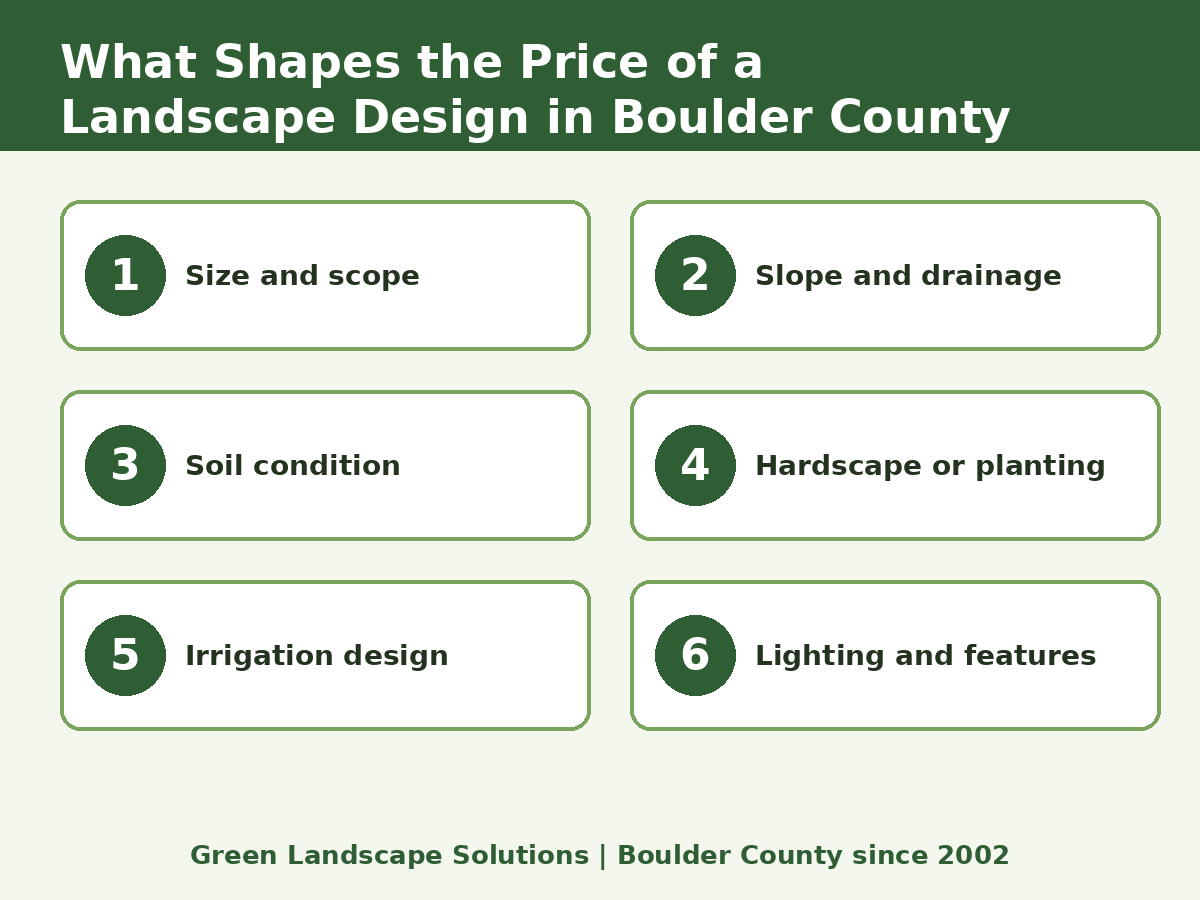
A front entry refresh and a full property plan are different jobs. More area, more zones, and more features mean more drawings and more decisions. Ask for the scope in writing so every proposal covers the same ground.
A flat lot drains easily. A sloped lot may need grading, retaining walls, or drainage planning before any planting begins. Those structural pieces often cost more than the plants. Our retaining wall guide covers when slope calls for a wall.
Colorado State University's PlantTalk Colorado recommends mixing organic material into the soil so plants grow well with less water. It says to spread 1 to 3 inches of organic material and work it into the top 6 to 8 inches. It also advises amending heavy clay and sandy or rocky soils. More yard to amend means more labor in the build.
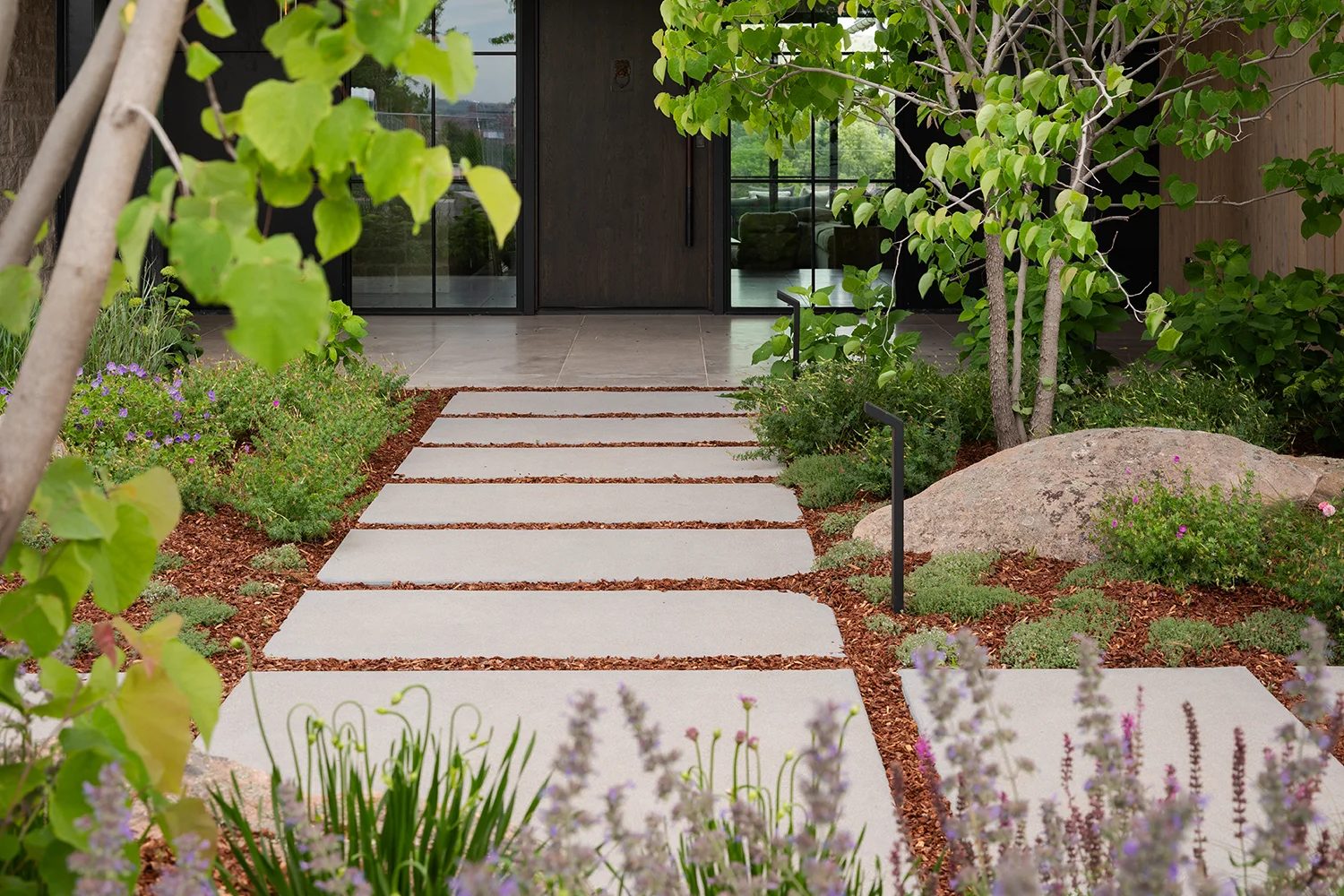
Patios, walkways, walls, and steps involve base preparation and stone or concrete. Planting beds usually involve less excavation. A design heavy on hardscape tends to cost more to build than one built around beds and mulch. The photo at the top shows the other side of that choice: large stepping pavers set in mulch, with low plantings and one boulder.
CSU Extension notes that the Front Range averages less than 15 inches of rain a year. It also says more than half of home water use goes to landscapes. A design that groups plants by water need and uses efficient irrigation can reduce long-term water use. It may add design time up front. See our smart irrigation guide for the controller side.
Landscape lighting, fire features, water features, and outdoor kitchens each add design detail and build cost. Many homeowners add them in later phases. Telling your designer which ones you want eventually lets the plan leave room for them.
Sometimes. The City of Boulder says some projects must follow its Landscaping and Screening Standards. If they apply, you must prepare a landscape plan that becomes part of the city's review. For remodels, requirements can depend on the value of the permit.
For projects under city review, the city lists planting seasons of March 1 to June 1 and September 1 to October 15. Written permission is needed to plant outside them. Medium and large trees must be 2-inch caliper nursery trees. New plants must come from the city's approved Tree and Plant List, effective March 7, 2026.
Those rules can change tree size, plant choices, and timing. Not every project falls under them, and the details live in Section 9-9-12(b) of the Boulder Revised Code. Confirm requirements with the city for your address. We broke down recent updates in our post on Boulder's 2026 landscaping code.
Green Landscape Solutions works in stages, and each stage has its own proposal. This keeps pricing clear and lets you decide at each step.
Our site says work typically begins within two to eight weeks of contract acceptance. Because design and construction sit under one team, the person who drew the plan stays involved in how it gets built. Our design-build comparison explains how that affects pricing and handoffs.
Plan first, then phase the build. CSU's PlantTalk Colorado advises planning and designing a landscape before investing time and money. A full plan lets you build the essentials now and add features later without tearing anything out.
Bring a short list of priorities, a sense of timing, and photos of the yard. Note where water pools, where the sun hits, and which features you want now versus later. A few clear answers speed up the proposal and make the pricing more accurate.
Green Landscape Solutions designs and builds in Boulder and nearby towns. Explore our landscape design pages for Louisville, Lafayette, Superior, Niwot, and Gunbarrel. See the full service areas list. For project types, read about our residential landscaping and design-build services.
A landscape design price makes sense once someone has seen your yard. Call (720) 468-0987 or Tell Us About Your Property. Share your priorities and timing, and our team will help you understand the right next step.
There is no single price. Design cost depends on project size, slope and drainage, soil, materials, irrigation, and features. Green Landscape Solutions offers a free initial consultation, then a written design proposal based on your property and goals.
Yes. Green Landscape Solutions prepares a design proposal first, which you sign and return with a retainer. After you approve the design, you receive a separate installation proposal for the build.
It can. The city says some projects must follow its Landscaping and Screening Standards, and then a landscape plan is part of the city review. Remodel requirements can depend on permit value. Confirm with the city for your address.
Plan the whole yard first, then phase the build. Colorado State University's PlantTalk Colorado advises planning before investing time and money. Build structure and drainage first, then add lighting or special features later.
Bring your priorities, your timing, and photos of the yard. Note where water pools and where the sun hits. Say which features you want now and which you might add later.
