
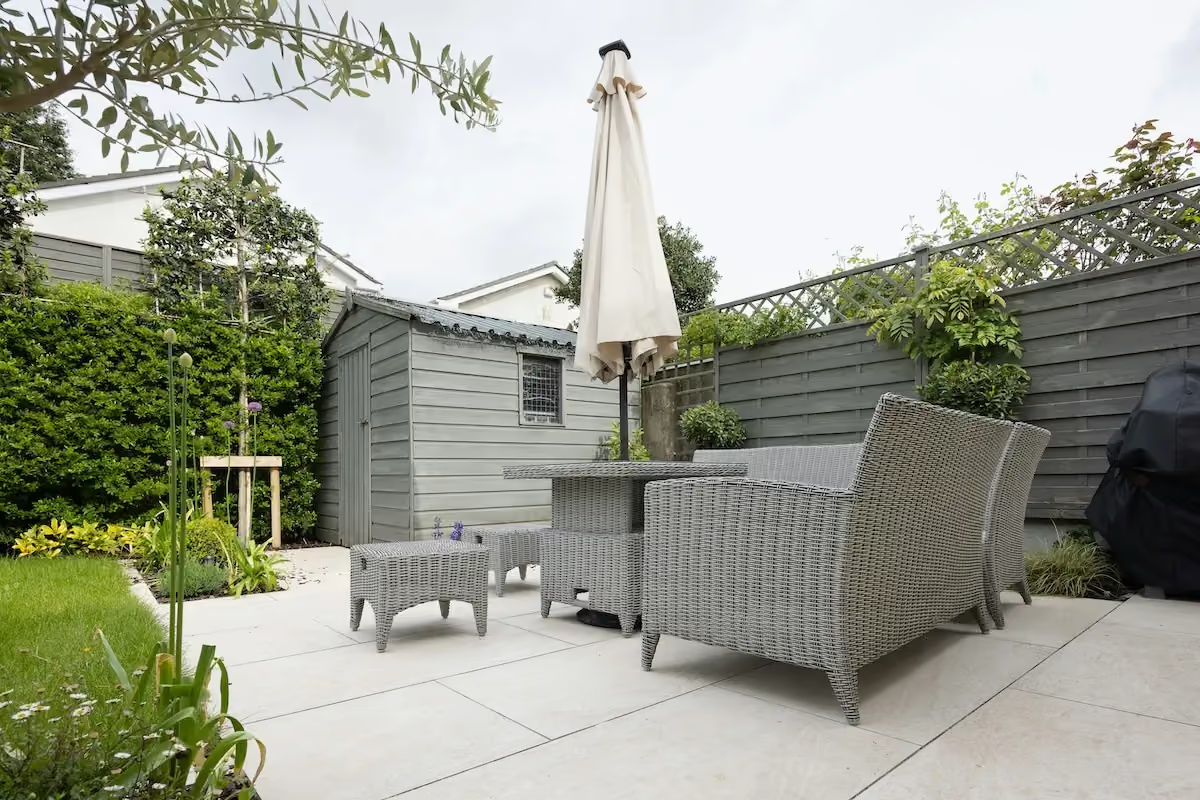

Not every square foot of your yard gets full Colorado sun — and that's not a problem to solve. It's a design opportunity hiding in plain sight. The shaded corners behind your house, tucked under mature trees, or pressed against a north-facing wall are some of the most livable, atmospheric spaces a landscape can offer. They stay cool during July heat waves. They hold moisture longer than sun-baked beds. And when designed with intention, they become the kind of quiet retreat that pulls you outside on a Tuesday evening for no reason at all.


Lorem ipsum dolor sit amet, consectetur adipiscing elit. Suspendisse varius enim in eros elementum tristique. Duis cursus, mi quis viverra ornare, eros dolor interdum nulla, ut commodo diam libero vitae erat. Aenean faucibus nibh et justo cursus id rutrum lorem imperdiet. Nunc ut sem vitae risus tristique posuere.
Not every square foot of your yard gets full Colorado sun. Some corners sit behind the house, tucked under mature trees, or pressed against a north-facing wall. Most homeowners see these spots as dead zones. They are actually opportunities.
Shade gardens are some of the most atmospheric, layered, and livable spaces in residential landscaping. They stay cool during July heat waves. They hold moisture longer than sun-blasted beds. And when designed with intention, they become the kind of quiet retreat that pulls you outside on a Tuesday evening for no reason at all.
Here in Boulder County, shade gardening comes with a twist. Our intense high-altitude UV, alkaline soils, and semi-arid climate mean the shade-plant playbook from the East Coast or Pacific Northwest needs serious editing. The good news? The Front Range offers a surprisingly deep palette of plants, materials, and design strategies that thrive in low light.
These ideas will help you rethink the shady corners of your property.
Shade gardening in Colorado is not the same as shade gardening in Oregon. Our dry air, clay-heavy soils, and freeze-thaw cycles filter out a lot of the classic shade catalog. But the plants that do work here are tough, textured, and surprisingly varied.
Colorado blue columbine performs beautifully in partial shade and is the state flower for good reason. Coral bells (Heuchera) bring foliage color that ranges from deep burgundy to lime green. Oregon grape (Mahonia repens) handles everything from dappled light to deep shade with three-season visual interest. And hostas, while not native, are workhorses in irrigated shade beds along the Front Range.
For dry shade under established trees, look to beebalm (Monarda fistulosa), golden currant (Ribes aureum), and kinnikinnick (Arctostaphylos uva-ursi). These plants evolved in the understory of Colorado's ponderosa pine forests. They do not need coddling.
The key is layering. Think tall shrubs in the back, mid-height perennials through the middle, and low groundcovers at the edges. This stacking creates depth and visual weight even in a small space.
A pathway through a shade garden does more than connect two points. It slows people down. It invites exploration. And in a practical sense, it keeps foot traffic off soil that stays damp longer than sun-exposed beds.
Flagstone set in gravel works well in Boulder County shade gardens. The natural stone echoes the foothills, and gravel between the joints improves drainage in areas where water tends to linger. Stepping stones "grouted" with creeping thyme or sweet woodruff add a living element that softens the hardscape over time.
Curved paths are especially effective in shade. They create the feeling of a larger space and encourage the kind of slow, wandering movement that makes a garden feel like a destination.
Shaded areas kick into a different gear at dusk. Without direct sunlight competing, even modest landscape lighting creates drama that sun-drenched spaces cannot match.
Low-voltage path lights along a walkway define structure after dark. Uplights aimed at tree canopies highlight branch architecture and leaf texture from below. And a single well-placed fixture near a water feature or seat wall can turn a forgotten corner into the most compelling spot on the property.
LED systems are the standard for Boulder County installations. They run cool, use minimal energy, and can be zoned so you control exactly which areas light up and when.
Sound changes everything in a garden. A pondless waterfall, a bubbling boulder, or a simple recirculating fountain introduces movement and white noise that makes a shaded space feel immersive rather than still.
Water features also pair naturally with shade. Without direct sun beating down on the surface, algae growth stays manageable. The water stays cooler. And the reflective surface adds a sense of light to spaces that might otherwise feel heavy.
In Colorado's dry climate, recirculating systems are the smartest choice. They use and reuse the same water, keeping consumption low while delivering the sensory benefits of flowing water year-round.
The best shade gardens are not just pretty. They are functional. A dining area under a pergola, a pair of Adirondack chairs beneath a mature oak, or a built-in seat wall along a stone patio transforms a shade garden from something you look at into something you live in.
Shady spots are natural havens during Colorado summers, when afternoon temperatures can push past 90 degrees. Designing a comfortable seating area within your shade garden gives you a functional outdoor room that stays pleasant when the rest of the yard is radiating heat.
Consider the surface material carefully. Flagstone and pavers absorb less heat than concrete in partial shade. Add a fire pit or fireplace for shoulder-season use, and the space works from April through October.
Boulder County homeowners have a natural advantage here. Local stone is abundant, beautiful, and perfectly scaled for residential landscapes. In a shade garden, boulders and rock groupings create structure that does not depend on sunlight to look good.
Rock also provides textural contrast. Set a weathered sandstone boulder next to the broad, smooth leaves of a hosta or the fine fronds of a lady fern, and the difference in texture does the work that flower color does in a sun garden.
Rock gardens built into sloped shade areas double as drainage solutions. Water moves across and between stones rather than pooling, which keeps root zones healthy in areas where moisture already lingers.
Most lawn grasses struggle in heavy shade. Moss thrives in it. Rather than fighting the conditions, lean into them.
Moss creates a velvety, evergreen groundcover that needs no mowing, no fertilizer, and minimal irrigation once established. In Boulder County's shaded microclimates, particularly on north-facing slopes or under dense tree canopy, moss can replace struggling turf and look intentional rather than accidental.
Pair moss with stepping stones and a few strategically placed ferns for a woodland effect that feels effortless. The result is a low-maintenance surface that stays green through most of the year and softens the edges of hardscape elements.
If your shade garden sits on a slope, a retaining wall is not just structural. It is an opportunity.
A well-designed stone retaining wall manages drainage and erosion while creating planting pockets, level terraces, and vertical interest. Fill the terraced beds with shade-loving perennials and let foliage spill over the edges. The wall becomes a living feature rather than a utilitarian barrier.
Natural stone walls built with dry-stack technique weather beautifully in Colorado's climate. The gaps between stones provide habitat for beneficial insects and allow plant roots to find their way into crevices, blurring the line between built and natural over time.
Shade-tolerant vines deliver color and texture on a vertical plane, which is especially valuable in narrow side yards or small courtyards where horizontal planting space is limited.
Virginia creeper is a strong performer on the Front Range. It tolerates shade, handles our alkaline soils, and turns brilliant red in fall. Climbing hydrangea is another option for partially shaded walls or fences, producing white lacecap flowers in early summer against deep green foliage.
Train vines on a trellis, along a fence, or up a pergola post to add height and enclosure to your shade garden without taking up ground-level square footage.
Shaded garden areas naturally attract birds looking for shelter and cooler temperatures during hot summer days. A simple birdbath becomes a focal point and a functional habitat element at the same time.
Position it where you can see it from a seating area or a window. Surround it with native shrubs that produce berries or seeds. Golden currant, snowberry, and elderberry all tolerate shade and provide food sources that draw songbirds, butterflies, and pollinators into the garden.
The result is a space that feels alive - not just planted, but inhabited.
Shade naturally lends itself to quiet, reflective spaces. A gravel-raking area inspired by Japanese Zen gardens, a simple stone bench surrounded by ferns, or a small clearing with a single specimen tree can become the most restorative spot on your property.
Gravel and crushed stone do not need sunlight to look good. They provide a clean, low-maintenance surface that drains well and stays tidy without mowing or irrigation. Combined with a few carefully placed boulders and a restrained plant palette, the effect is calm, intentional, and deeply personal.
Container gardens give you options that in-ground beds do not. You can move planters to follow shifting light patterns through the seasons. You can swap out plants that are not performing. And you can add instant color or texture to a shaded patio or entryway without excavating a single square foot.
Group containers in odd numbers for visual impact. Mix heights, textures, and pot materials. Terra cotta, weathered metal, and concrete all work well in Colorado's dry air and complement the natural stone and wood common in Front Range landscapes.
Colorado homeowners tend to focus on the sun-baked parts of the yard. That makes sense in a state with 300 days of sunshine. But the shaded corners deserve just as much design attention.
Shade gardens use less water. They require less maintenance. They stay comfortable when the rest of the property is too hot to enjoy. And they reward thoughtful design with layered texture, seasonal interest, and a sense of enclosure that open landscapes cannot replicate.
The Front Range climate does impose constraints. Dry shade under established trees is genuinely challenging. Alkaline clay soils limit some plant choices. And freeze-thaw cycles demand materials and plantings that can handle temperature swings.
But those constraints are what make a well-designed shade garden here feel earned. It is not a default. It is a deliberate, crafted response to the conditions of the site.
Ready to transform the shaded corners of your property into something you actually use and enjoy? Green Landscape Solutions designs and builds shade gardens tailored to Colorado's unique climate and your vision for the space. Call us at (720) 468-0987 or visit greenlandscapellc.com to schedule a consultation.
