
Walk the trails near the Flatirons in June and you'll see what a healthy pollinator landscape looks like: bees working through blanket flower and penstemon, hummingbirds chasing scarlet gilia, monarchs pausing on showy milkweed. That same biodiversity is achievable in a residential yard in Boulder, Louisville, or Superior, and it starts with thoughtful plant selection and design.


Lorem ipsum dolor sit amet, consectetur adipiscing elit. Suspendisse varius enim in eros elementum tristique. Duis cursus, mi quis viverra ornare, eros dolor interdum nulla, ut commodo diam libero vitae erat. Aenean faucibus nibh et justo cursus id rutrum lorem imperdiet. Nunc ut sem vitae risus tristique posuere.
Boulder County is one of the most ecologically rich places on the Front Range. Over 550 species of native bees live here, along with 22 species of bumblebees, hundreds of butterfly species, and hummingbirds that migrate through every summer. These pollinators sustain the wildflowers on the Flatirons trails, the produce at the Boulder Farmers Market, and the natural beauty that makes this part of Colorado unlike anywhere else.
They're also in trouble. A 2024 report from CU Boulder found that populations of some pollinator species in Colorado have dropped by more than half over the last 35 years. About 20% of the state's native bumblebee species may warrant federal protection. Monarch butterfly populations have declined roughly 90% over the past two decades. The causes are interconnected: habitat loss, pesticide use, climate shifts, and competition from non-native honeybees in urban areas.
The good news is that residential landscapes can make a meaningful difference. A well-designed pollinator garden doesn't just help insects and birds. It adds color, movement, seasonal interest, and a living quality to the landscape that turf and ornamental plantings alone can't provide. And in Boulder County's semi-arid climate, the native plants that pollinators depend on are often the same drought-tolerant species that thrive with minimal irrigation.
Here's how to design one that works for both the pollinators and the people who live with it.
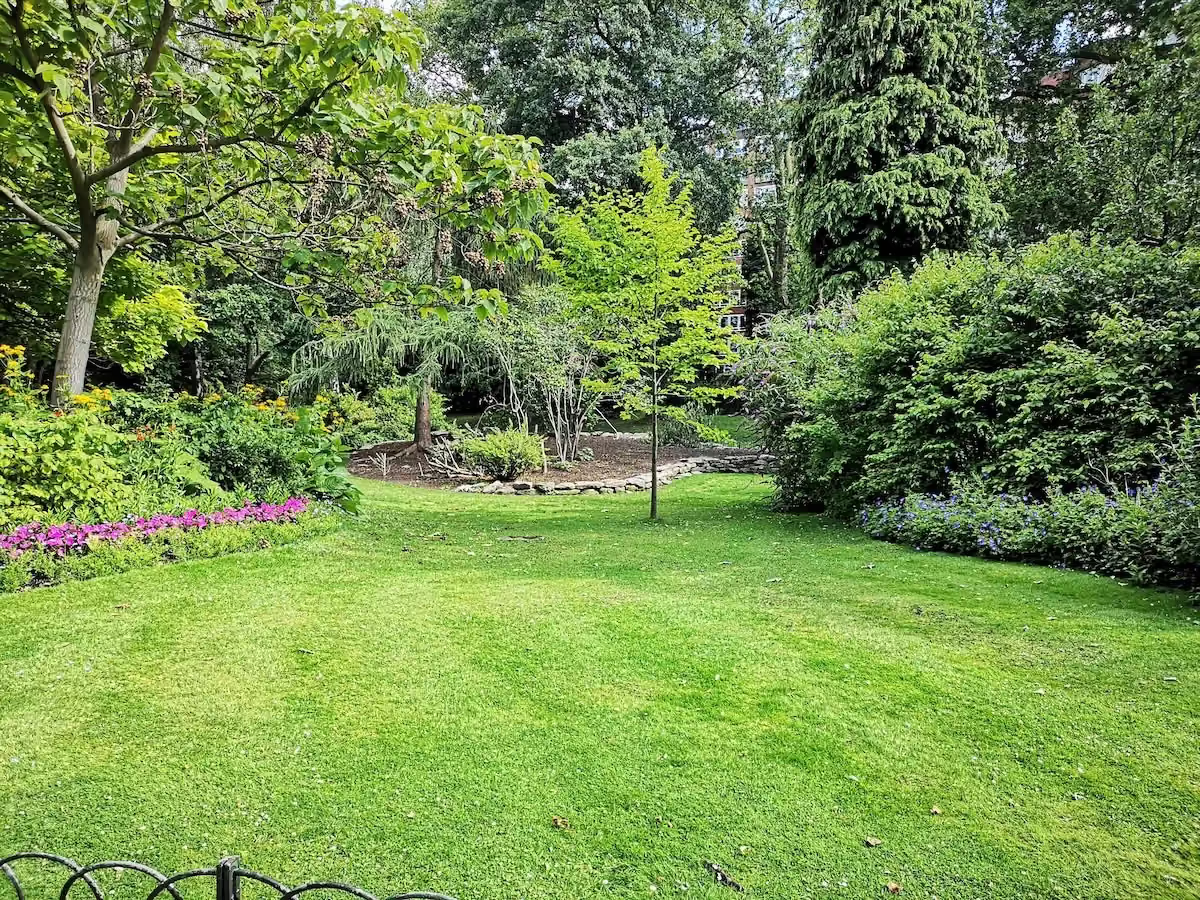
The most common mistake with pollinator gardens is treating them as an isolated garden bed plopped into a corner of the yard. The gardens that attract the most diverse pollinator activity and look the best are designed as integrated parts of the overall landscape.
Layer the planting. CSU Extension recommends designing pollinator habitats in layers that replicate nature: trees and large shrubs provide structure and shelter, medium shrubs and tall perennials create a mid-canopy, and low groundcovers and grasses fill the floor. This layered approach provides nesting sites at multiple heights, wind protection, and a diversity of microclimates that different pollinator species need.
Plant in masses, not singles. Scattered individual plants are hard for pollinators to find and inefficient for them to forage. The Xerces Society and Colorado Native Plant Society both recommend planting in clusters of at least three to nine of the same species. These clusters create visible and aromatic targets that pollinators can locate from a distance. From a design perspective, mass plantings also create stronger visual impact, reading as intentional sweeps of color rather than a random collection of one-offs.
Connect habitat across your property. A pollinator garden in the backyard does more good when it's linked to plantings along the side yard, near the front entry, and in the streetside planting strip. These connections create corridors that allow bees and butterflies to move through your property safely. Even a few flowering plants in containers on a patio extend the reach of a pollinator-friendly landscape.
Pollinators need food from early spring through late fall. A garden that peaks for three weeks in June and then goes quiet for the rest of the season leaves pollinators without resources during critical periods. In Boulder County's growing season (roughly May through October, with some activity in April on warm days), designing for continuous bloom is the most important thing you can do.
Early season (April through May). The first pollinators emerge hungry. Pasque flower (Pulsatilla patens) is one of the earliest native bloomers, pushing through snow-dusted ground. Rocky Mountain columbine (Aquilegia caerulea), Colorado's state flower, begins blooming in late spring and attracts both bumblebees and hummingbirds. Golden banner (Thermopsis divaricarpa) provides early-season yellow spikes that native bees seek out.
Mid-season (June through July). This is when diversity peaks. Rocky Mountain penstemon (Penstemon strictus) produces deep purple-blue spikes that bees practically disappear into. Blanket flower (Gaillardia aristata) blooms for weeks in red and gold, attracting butterflies and smaller native bees. Showy milkweed (Asclepias speciosa) is the primary milkweed species native to the Front Range and the essential host plant for monarch butterfly caterpillars. Native bee balm (Monarda fistulosa) covers itself in lavender blooms that hummingbirds, bees, and butterflies visit simultaneously.
Late season (August through October). Late bloomers are critical because they fuel migrating monarchs and provide the last forage before pollinators overwinter. Goldenrod (Solidago species) is one of the most valuable late-season nectar sources, often unfairly blamed for allergies (ragweed is the actual culprit). Rabbitbrush (Ericameria nauseosa) lights up the foothills in golden yellow through September and October. Purple aster (Symphyotrichum species) provides the last major flush of color and nectar, often blooming until the first hard frost.
The following species are proven performers for pollinator gardens along the Front Range. They're adapted to our alkaline clay soil, handle our low annual precipitation, tolerate intense UV at elevation, and provide documented value to native pollinators.
For bees: Rocky Mountain penstemon, blanket flower, prairie coneflower (Ratibida columnifera), yarrow (Achillea millefolium), purple prairie clover (Dalea purpurea), anise hyssop (Agastache foeniculum). Bees are drawn to blue, purple, and yellow flowers with open or tubular forms that allow access to nectar.
For butterflies: Showy milkweed (essential for monarchs), native bee balm, aster, goldenrod, butterfly weed (Asclepias tuberosa), Rocky Mountain blazing star (Liatris ligulistylis). Butterflies prefer flat-topped or clustered flowers they can land on while feeding.
For hummingbirds: Sunset hyssop (Agastache rupestris), scarlet gilia (Ipomopsis aggregata), Rocky Mountain penstemon, native bee balm. Hummingbirds are attracted to red, orange, and deep pink tubular flowers.
For structure and shelter: Apache plume (Fallugia paradoxa), three-leaf sumac (Rhus trilobata), chokecherry (Prunus virginiana), and native ornamental grasses like blue grama (Bouteloua gracilis) and little bluestem (Schizachyrium scoparium). Shrubs and grasses provide nesting habitat, wind protection, and overwintering cover.
Nectar and pollen are just part of what pollinators need. A truly effective pollinator landscape includes features that support the full lifecycle.
Bare soil patches. The majority of Colorado's native bees are solitary ground nesters. They dig small burrows in bare, undisturbed soil to lay their eggs. Most residential landscapes have zero bare soil because everything is covered in mulch, turf, or groundcover. Leave a few small areas (even just a few square feet in a sunny, well-drained spot) unmulched and undisturbed. South-facing slopes are ideal.
Hollow stems and brush. Some native bee species nest in hollow plant stems and small cavities in wood. Leaving dried flower stalks and ornamental grass stems standing through winter (rather than cutting everything back in fall) provides overwintering habitat. The Wild Ones Front Range Chapter emphasizes that "leave the leaves" is one of the most impactful things homeowners can do. Butterflies and moths overwinter in leaf litter as eggs, caterpillars, or chrysalises, and raking, blowing, or shredding leaves can destroy them.
Water. Pollinators need water, but they can't use a birdbath filled with deep water. A shallow dish or saucer filled with pebbles and just enough water to create a thin layer over the stones gives bees and butterflies a place to drink and absorb minerals without drowning. Place it near the garden in a sunny spot.
No pesticides. The City of Boulder's pollinator program is direct about this: the decline of bees and pollinators is associated with pesticide use, including insecticides, herbicides, and fungicides. Even products labeled as safe for pollinators can harm native bees when applied during foraging hours or when residues persist on blooms. An effective pollinator garden relies on plant diversity to attract natural predators (ladybugs, lacewings, parasitic wasps) that keep pest populations in check without chemicals.
A pollinator garden doesn't have to look like an untended meadow (unless that's the aesthetic you want). The same design principles that make any landscape beautiful apply here: structure, repetition, contrast, and seasonal progression.
Use hardscape to anchor the garden. A flagstone path through a pollinator planting bed gives the garden a designed, intentional feel. A seat wall or bench at the edge creates a viewing point. A simple stone border between the pollinator bed and the lawn (or patio) signals that the garden is purposeful, not neglected.
Maintain clean edges. The single most effective way to make a naturalistic planting look designed is to keep the edges crisp. Mow the lawn edge cleanly where it meets the garden. Edge the planting beds with a defined border of stone, steel, or a clean mulch line. The interior of the garden can be lush and full, but the perimeter should look maintained.
Repeat key plants throughout the landscape. Use the same pollinator species in multiple locations (front yard, backyard, side beds) to create visual cohesion across the property. Repeating three or four signature species ties the landscape together and creates the massed planting effect that benefits pollinators.
Consider the winter view. Many pollinator plants die back to the ground in winter, which can leave gaps in the landscape. Include evergreen structural plants (dwarf conifers, ornamental grasses that hold their form through winter) alongside the pollinator perennials so the garden has presence in every season. The dried seed heads of coneflowers, grasses, and goldenrod also provide winter texture and food for birds.
Finding true Colorado natives (not cultivated varieties from other regions) can take some effort. A few local resources stand out.
Harlequin's Gardens in Boulder specializes in native and adapted plants for the Front Range and is widely regarded as one of the best sources for regionally appropriate pollinator plants.
Plant Select is a collaboration between Denver Botanic Gardens and Colorado State University that tests and recommends plants for the intermountain west, including native species proven to perform in our climate.
Colorado Native Plant Society (CoNPS) maintains gardening guides and plant lists organized by water use and bloom season specifically for Front Range landscapes.
When purchasing plants, look for stock grown without systemic neonicotinoid insecticides, which persist in plant tissue and can harm the pollinators you're trying to attract. Ask the nursery directly. The City of Boulder recommends supporting nurseries that provide insecticide-free plants, and growing from untreated seed or cuttings is the safest option.
You don't need to transform your entire yard to make a difference. The City of Boulder's pollinator pathway program and the Wild Ones Front Range Chapter both emphasize that even a small planting can contribute meaningfully to pollinator habitat.
Start with one bed. Choose five to eight native species that cover early, mid, and late-season bloom times. Plant in clusters of three to five of each. Include at least one shrub for structure, leave a patch of bare soil, and skip the pesticides. That's a functional pollinator garden.
From there, you can expand season by season, converting additional lawn or ornamental beds into pollinator habitat as plants mature and fill in. The phased approach works especially well in Boulder County, where it aligns with water-wise landscaping goals and allows you to observe which plants perform best on your specific site before investing further.
At Green Landscape Solutions, we design pollinator gardens as part of larger landscape plans. Our team integrates pollinator-friendly plantings into residential landscapes in a way that supports biodiversity while maintaining the design quality and seasonal beauty that homeowners expect. Whether it's a dedicated pollinator bed, a meadow conversion, or native plantings woven throughout a new landscape, the goal is always the same: a landscape that's alive.
Contact us at (720) 468-0987 or visit greenlandscapellc.com to schedule a consultation.
Green Landscape Solutions is a premier landscape architecture and construction firm serving Colorado. We specialize in sustainable, water-wise landscape design built for Colorado's unique climate.
