
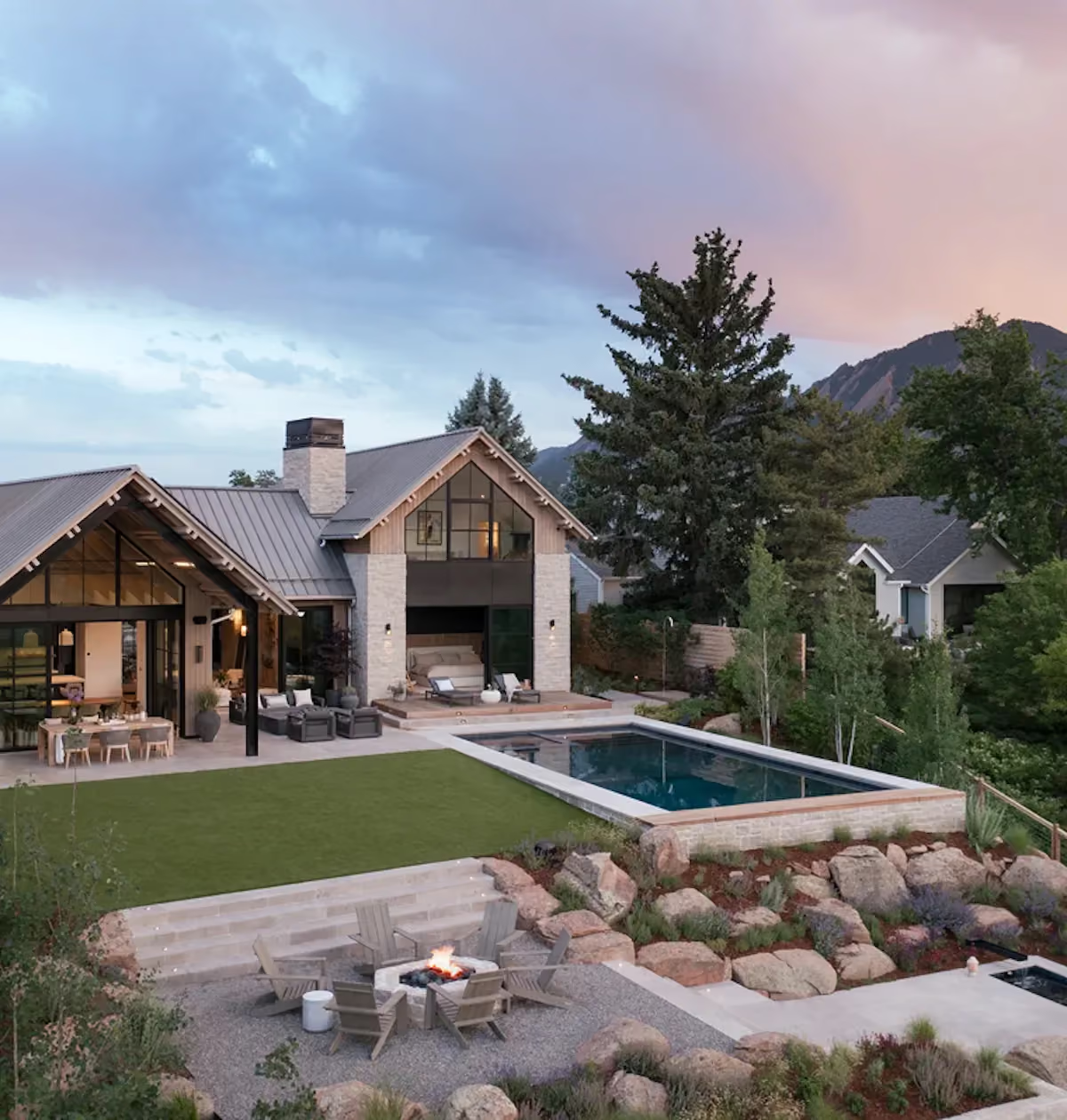

Colorado's freeze-thaw cycles, clay soil, and intense UV demand more from a patio than most climates do. Here are the materials and designs that hold up on the Front Range.


Lorem ipsum dolor sit amet, consectetur adipiscing elit. Suspendisse varius enim in eros elementum tristique. Duis cursus, mi quis viverra ornare, eros dolor interdum nulla, ut commodo diam libero vitae erat. Aenean faucibus nibh et justo cursus id rutrum lorem imperdiet. Nunc ut sem vitae risus tristique posuere.
A patio in Colorado needs to do things that patios in most of the country don't. It needs to handle 50-degree temperature swings in a single day. It needs to survive freeze-thaw cycles that crack inferior materials from the inside out.
It needs to perform in intense UV at 5,000-plus feet of elevation, where the sun fades colors and degrades sealants faster than at sea level. And it needs to be inviting enough that you actually use it, because Colorado gives you 300 days of sunshine and cool evenings that make outdoor living one of the best parts of living here.
The patio ideas that look great on Pinterest don't always survive a Front Range winter. Here are the ones that do, designed specifically for how Boulder County homeowners actually live outdoors.
The wrong material on a Colorado patio doesn't just look bad after a few years. It fails. Water seeps into porous surfaces during the day, freezes overnight, expands, and cracks the material from within. This freeze-thaw cycle can repeat daily for weeks during spring and fall. At elevation, UV exposure accelerates fading and surface deterioration. And our heavy, expansive clay soil shifts constantly, putting stress on anything sitting on top of it.
A Few Options
Flagstone. The most popular natural stone patio material in Boulder County, and for good reason. Colorado Red flagstone (quarried locally from Lyons sandstone) and Colorado Buff are dense, low-porosity stones that resist water absorption and handle freeze-thaw cycles well. The natural cleft surface provides excellent traction when wet or icy. Flagstone ages beautifully, developing character over decades without fading significantly in UV. The irregular shapes create an organic, natural look that complements Front Range landscapes.
Interlocking concrete pavers. A balance of durability and design options for most homeowners. Quality pavers rated for freeze-thaw conditions (look for a water absorption rate under 5%) handle Colorado's climate reliably. Interlocking pavers flex with soil movement rather than cracking, which is critical in our expansive clay. They're available in a wide range of colors, textures, and patterns, including options that closely mimic natural stone.
Concrete. A cost-effective option that can provide a desired look, but also mimic other materials (stamped concrete option). Make sure to finish any cracks and spalls quickly in Colorado’s climate. Plan to reseal every two to three years.
Porcelain pavers. A newer option gaining popularity for high-end projects. Porcelain has near-zero water absorption, making it essentially freeze-thaw proof. It resists UV fading, staining, and scratching.
Be aware that cheap pavers from big-box stores with high absorption rates fail within a few years. Travertine and other highly porous natural stones require constant sealing to survive here. And any patio installed without an adequate gravel base for drainage will heave and shift in our clay soil, regardless of what surface material you choose.
The best patio design starts with a simple question: what do you want to do out there? Here are the most popular configurations we build across Boulder County, designed around real use rather than just appearance.
This is the most requested patio concept in Boulder County right now. An outdoor living room treats the patio as a true extension of the home's interior, with comfortable seating, a fire feature, and enough overhead structure to use the space in varying weather.
What makes it work in Colorado: A pergola or covered structure overhead is almost essential in Colorado's intense afternoon sun. A gas fire pit (where feasible) anchors the seating area and extends the season from April through November (and beyond on mild winter days). Weather-resistant upholstered furniture has improved dramatically.
Size it right: A comfortable outdoor living room for four to six people needs roughly 250 to 500 square feet of patio space, not including the fire feature. For larger groups, plan for 500+ square feet.
Built for hosting, with distinct zones for cooking, dining, and lounging. The layout follows how a gathering actually flows: people arrive and gather near the grill or outdoor kitchen, move to the dining table, then settle around the fire feature as the evening cools.
What makes it work in Colorado: Zone separation is key. A cooking zone with a built-in grill, counter space, and storage. A dining zone sized for your typical group (a table for eight is the most common request). And a fire zone with comfortable seating for post-dinner conversation. Defining these zones with different paver patterns, slight elevation changes, or material transitions creates visual interest and natural flow.
Colorado-specific tip: Orient the dining area to face west for sunset views. Most Boulder County properties face the Flatirons or the foothills, and that view is one of the best features you can design around. A pergola over the dining area provides shade during afternoon cooking while leaving the evening sky open.
For homeowners who want a beautiful outdoor space without the upkeep of a lawn-heavy landscape. The patio becomes the primary outdoor surface, surrounded by xeriscaped planting beds, native grasses, and mulch rather than turf.
What makes it work in Colorado: This approach aligns perfectly with water-wise goals. A generous patio (500+ square feet) surrounded by drought-tolerant plantings eliminates the irrigation, mowing, and fertilization that a traditional backyard demands. Decomposed granite or pea gravel transitions between the patio and planting beds create a natural, low-maintenance buffer. Native ground covers like creeping thyme between flagstone joints add color without irrigation.
Design detail that matters: Include at least one area of green, even if it's a small pocket of ornamental grass or a cluster of evergreen shrubs. A patio surrounded entirely by hardscape and rock can feel stark and heat up dramatically. Plants soften the space and keep temperatures comfortable.
Properties with grade changes (common across Boulder County and the foothills) benefit from patios that step down the slope rather than fighting it. Each level creates a distinct zone, and retaining walls between levels add visual weight and seating.
What makes it work in Colorado: Terracing a slope with stone retaining walls and patio landings solves two problems at once: it creates usable flat space on a sloped lot, and it manages drainage by controlling how water moves down the hill. The retaining walls themselves become design features, especially when built with Colorado buff or moss rock that ties into the natural landscape.
Practical note: Multi-level patios require more engineering than flat installations. Retaining walls above 4 feet typically need structural design and building permits in Boulder County.
Colorado's 300 days of sunshine mean your patio is usable far more of the year than most people expect. Designing for four-season use means incorporating elements that make the space comfortable in every condition.
What makes it work in Colorado: A solid-roof pergola or covered structure for rain and snow protection. A gas fire feature for warmth on cool evenings (which is most evenings at elevation, even in July). Radiant heaters mounted under the roof structure for true cold-weather use. And strategic wind protection, because Boulder County wind can make an otherwise comfortable space unusable. A half-wall, panel, or dense evergreen hedge on the prevailing wind side (typically northwest) transforms the experience.
Material consideration: For four-season patios with a roof structure, the patio surface stays drier and experiences less freeze-thaw cycling than an exposed surface. This opens up material options (like travertine) that might not hold up on a fully exposed patio.
Beyond the overall concept, a few details separate a patio that performs from one that disappoints.
Base preparation in clay soil. This is an important factor in patio longevity along the Front Range. Boulder County's expansive clay swells when wet and shrinks when dry, constantly shifting anything on top of it. Every patio we build starts with excavation and a compacted gravel base. This gravel layer provides drainage, prevents frost heave, and creates a stable platform that moves with the soil rather than cracking against it. Skipping or shortcutting the base is the most common cause of patio failure.
Drainage slope. The patio surface must slope away from the house. Trapped water against the foundation causes basement leaks, foundation damage, and accelerated freeze-thaw deterioration of both the patio and the home's structure. In Boulder County's clay, drainage design is not optional.
Integrated landscape lighting. At elevation, the sun is intense and the evenings come fast. Low-voltage LED lighting built into the patio design (step lights, path lights, seat wall lighting, and tree uplighting) extends usability after dark and adds safety on steps and grade changes. Lighting is far easier and less expensive to install during patio construction than to retrofit later.
Edge planting. The transition between patio and landscape is where design either succeeds or falls flat. A clean edge with a row of boulders, a low planting of ornamental grasses, or a bed of drought-tolerant perennials frames the patio and softens the hardscape. Without edge planting, even a beautiful patio can look like a concrete island in the yard.
Furniture selection for Colorado. Outdoor furniture at elevation takes more abuse than at lower altitudes. UV degrades plastics and fades fabrics faster. Wind moves lightweight furniture. And hail is a recurring reality. Invest in heavy, powder-coated aluminum or steel frames with solution-dyed acrylic cushions. Avoid lightweight resin furniture (cracks in UV), untreated wood (dries out and splits), and any fabric not rated for outdoor UV exposure. Store cushions or use weatherproof covers during the off-season.
The best backyard patios in Colorado aren't copies of what works in other parts of the country. They're designed around our specific climate, built with materials that handle our weather, and configured for how Front Range homeowners actually spend time outdoors. That means proper base preparation for clay soil, materials rated for freeze-thaw, fire features you can use year-round, and enough overhead structure to handle our intense sun and occasional afternoon storm.
At Green Landscape Solutions, patios and outdoor living spaces are at the core of what we design and build. We work with homeowners to create outdoor spaces that are beautiful, functional, and built to last in Colorado's demanding climate. Whether you're envisioning a simple flagstone patio with a fire pit or a multi-level outdoor room with a kitchen, fireplace, and pergola, our Design + Build + Maintain approach takes the project from concept through completion.
Contact us at (720) 468-0987 or visit greenlandscapellc.com to schedule a consultation.
Green Landscape Solutions is a premier landscape architecture, maintenance, and construction firm serving Boulder, Erie, Lafayette, Louisville, Niwot, Superior, Broomfield, Thornton, and many others since 2002. We specialize in sustainable, water-wise landscape design built for Colorado's unique climate.
