

Tightened the intro to two sentences. Let me know if you'd like it even shorter or want to tweak the wording.


Lorem ipsum dolor sit amet, consectetur adipiscing elit. Suspendisse varius enim in eros elementum tristique. Duis cursus, mi quis viverra ornare, eros dolor interdum nulla, ut commodo diam libero vitae erat. Aenean faucibus nibh et justo cursus id rutrum lorem imperdiet. Nunc ut sem vitae risus tristique posuere.
Anyone who has lived along the Front Range long enough has seen it: a homeowner tears out an old patio and hauls perfectly good flagstone to the landfill. A builder scrapes a lot of moss rock boulders that took thousands of years to weather into something beautiful, then orders new ones from a supplier many miles away.
It doesn't have to work that way.
At Green Landscape Solutions, we've spent over 20 years building landscapes across Boulder, and one of the most rewarding parts of the work is finding ways to use what's already on a property. An old sandstone walkway. Boulders pushed to the edge of a lot by a grading crew. Concrete pavers from a patio that no longer fits how a family lives. These materials carry a history and a character that new products simply can't replicate.
The first thing we do on any project is walk the entire site with the homeowner and take inventory. We're looking at everything: stone walls, old patios, boulders, edging, gravel, even broken concrete. The question isn't just "is this in good shape?" It's "can this become something?"
In Boulder, we're lucky. The materials people have on their properties tend to be durable. Lyons Red sandstone flagging from a 30-year-old patio is still structurally sound. Colorado moss rock that's been sitting in a garden bed for decades has developed lichen and patina that you literally cannot buy new. That character is irreplaceable.
We assess three things for every material we find on site. First, structural integrity: is the stone cracked, spalling, or compromised by freeze-thaw damage? Second, quantity: do we have enough to do something meaningful, or just a handful of scraps? Third, compatibility: will it work with the design direction the homeowner wants?
More often than not, at least some of what we find is worth incorporating.
Sandstone flagging is the big one. Lyons Red and Colorado Buff sandstone have been the go-to patio and walkway materials along the Front Range for generations. The quarries in Lyons, just north of Boulder, have been producing this stone since the 1880s. It's the same material you see on the University of Colorado campus, and it's incredibly durable. When we demo an old sandstone patio, that stone almost always gets a second life.
Moss rock and field boulders are another treasure. Properties in the foothills and along the Highway 36 corridor often have moss-covered boulders that were placed (or naturally occur) on the landscape. These develop their coloring over decades of exposure to Colorado's climate. We've repositioned boulders to create seat walls, water feature accents, and garden anchors. Once you move a boulder, the lichen on the exposed face continues to grow. It already belongs to the site.
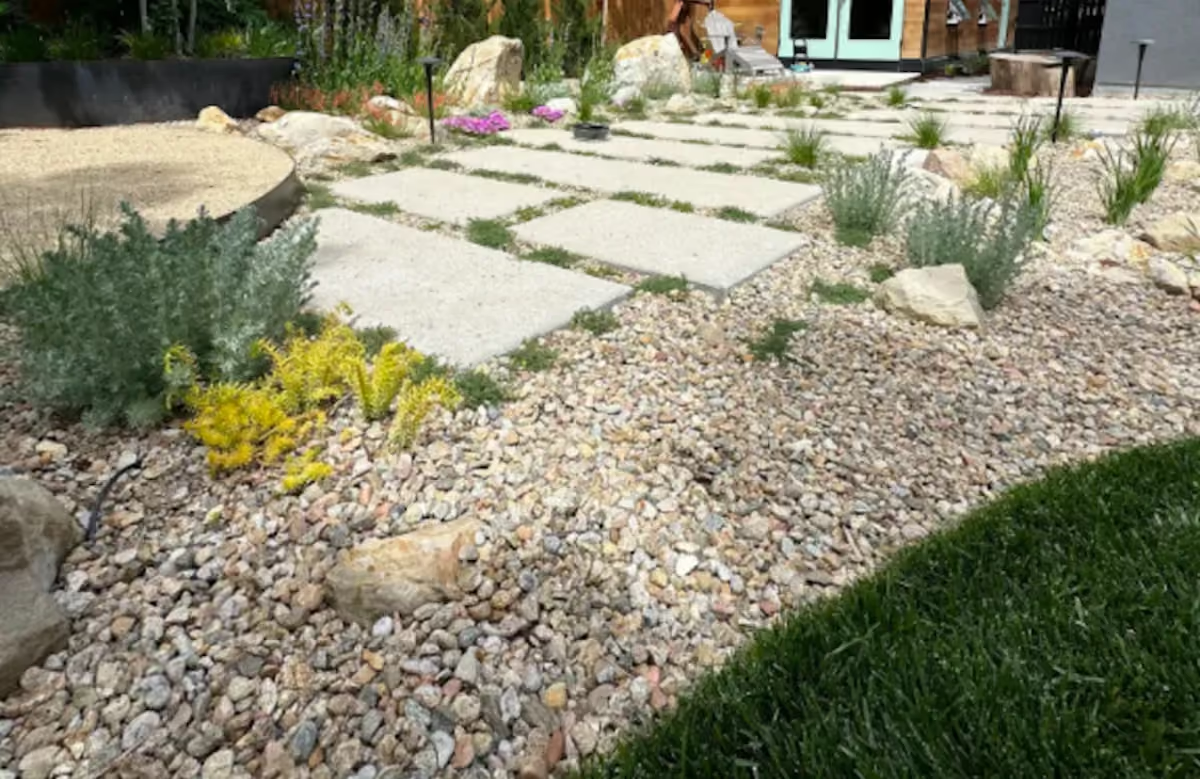
Concrete pavers and slabs surprise people. Old concrete isn't glamorous, but it's functional. We've broken concrete slabs into irregular pieces and relaid them as "urbanite" stepping stones with low-growing thyme or sedum planted in the gaps. The result has more character than a brand-new paver installation.
Gravel and crushed stone is almost always reusable. If a property has an existing gravel area, we can redistribute it, supplement it, or use it as a base layer beneath new hardscaping.
Irrigation components sometimes survive too. Mainlines, valve boxes, and even some heads can be incorporated into a new system if they're in decent condition. This can save meaningful money on larger properties.
This is probably the most common concern we hear. Homeowners worry that working with salvaged material means settling for something less than what they envisioned.
Constraints often produce the most creative solutions. When you have a limited quantity of beautiful old sandstone, it forces you to be intentional about where you place it. Maybe the salvaged flagstone becomes a feature walkway rather than covering an entire patio. Maybe those old moss rock boulders define a seating area in the garden instead of lining a driveway.
If you want a 600-square-foot flagstone patio and the property only has 200 square feet of salvageable stone, we're not going to stretch it thin. We'll blend it with new material, or use the salvaged stone for a specific feature and source new stone for the larger area. The key is matching. Colorado Buff sandstone from the same formation will blend naturally whether the stone is 2 years old or 40. Lyons Red is the same way.
This is a critical question for our climate. Boulder County goes through dramatic temperature swings, sometimes 50 degrees or more in a single day during shoulder seasons. Water gets into stone, freezes, expands, and the cycle repeats dozens of times each winter.
The good news is that materials which have already survived years of Colorado freeze-thaw have essentially proven themselves. If a piece of Lyons sandstone has been a walkway for 25 years and shows no cracking or delamination, it's going to keep performing. The stone has already been tested by the harshest conditions it will face.
We do inspect carefully. Hairline cracks that would be cosmetic in a milder climate can become structural problems here. And any stone that was sitting in standing water or poorly drained soil for years may have internal moisture damage that isn't visible on the surface.
The installation matters as much as the material. Salvaged stone needs the same proper base preparation as new stone: a compacted gravel base, appropriate slope for drainage, and joints that allow for expansion and contraction. We never cut corners on the installation just because the surface material was free.
It's significant, and for two reasons.
First, there's the direct environmental benefit. Every ton of stone that stays on site is a ton that doesn't go to the landfill and a ton that doesn't need to be quarried, processed, and trucked in. The carbon footprint of transporting heavy landscape materials is real. A typical pallet of flagstone weighs 2,000 to 3,000 pounds. When we can avoid hauling that kind of weight in and out, it makes a measurable difference.
Second, there's longevity. Materials that have already weathered and settled on a site tend to continue performing well. They've adapted to the specific soil chemistry, moisture conditions, and temperature extremes of that property. New materials need time to go through that same process.
Boulder residents care about sustainability. We see it in the water-wise landscapes, the native plant choices, the interest in permeable hardscaping. Reusing existing materials fits naturally into that mindset. It's not a sacrifice or a compromise. It's a deliberate choice to work with what the land already offers.
Before you tear anything out, pause. Walk your property with your landscape designer and identify what you have. That pile of rocks along the fence line might be exactly what your new garden bed needs. The old patio stone might be the foundation of a better design.
If you’re doing any demolition work on your property, even if a landscape project is months or years away, set the good stone aside. Stack it carefully. Keep it on the property. That material only becomes more valuable with time.
Contact us at (720) 468-0987 or visit greenlandscapellc.com to schedule a consultation.
Green Landscape Solutions is a premier landscape architecture, maintenance, and construction firm serving Boulder, Erie, Lafayette, Louisville, Niwot, Superior, Broomfield, Thornton, among many others since 2002. We specialize in sustainable, water-wise landscape design built for Colorado's unique climate.
