
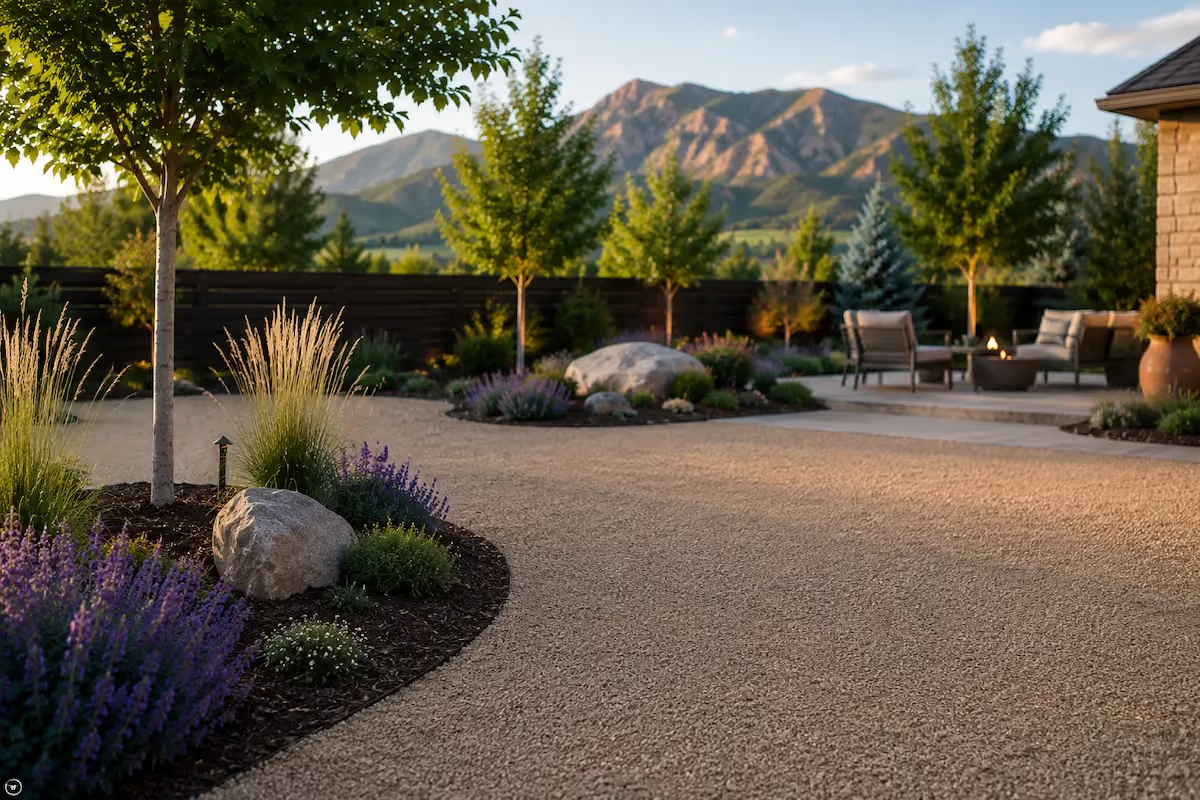

The most powerful element in a landscape is often the part with nothing in it. Designers call it negative space: the open ground, the pause between plantings, the quiet stretch that lets everything else breathe. In this guide, you'll learn what negative space is, why it matters in design, and how to use emptiness as a tool in a Colorado landscape. Sometimes the best move is to leave room.


Lorem ipsum dolor sit amet, consectetur adipiscing elit. Suspendisse varius enim in eros elementum tristique. Duis cursus, mi quis viverra ornare, eros dolor interdum nulla, ut commodo diam libero vitae erat. Aenean faucibus nibh et justo cursus id rutrum lorem imperdiet. Nunc ut sem vitae risus tristique posuere.
A yard packed corner to corner feels busy and restless. A yard that knows when to stop feels calm and intentional. In this guide, you will learn what negative space is, why it matters in design, and how to use emptiness as a tool in a Colorado landscape. Sometimes the best move is to leave room.
Negative space is the open, unoccupied area in a composition that surrounds and defines the things within it. In a painting it is the background. In a garden it is the lawn, the gravel, the paving, or the simple stretch of open ground between features.
The idea comes from art and design, where the space around a subject is treated as actively as the subject itself. A landscape works the same way. The empty areas are not leftovers. They are part of the composition, doing real work.
Think of it as the silence between notes in music. Without the pauses, the melody is just noise. Without open space, a garden is just a crowd of plants.
Restraint is what separates a designed landscape from a planted one. When every inch is filled, the eye has nowhere to settle and the whole space feels chaotic. Open areas give the viewer room to breathe.
Negative space also makes the things you do plant far more powerful. A single sculptural tree in an open bed commands attention. The same tree crowded among a dozen others disappears. Emptiness is what gives a focal point its focus.
There is a practical payoff too. Open space is easier to move through and easier to maintain. A landscape with clear, uncluttered areas feels generous rather than cramped, and it ages better as plants mature and fill in.
Using emptiness well takes intention. Follow these steps to build negative space into a design.
This approach fits Colorado especially well. Our semi-arid climate already rewards restraint, and open negative space often means less planted area to irrigate. Gravel, decomposed granite, and stone can serve as beautiful open ground that uses no water at all.
It also complements the materials our region does best. A few well-placed boulders set in open gravel, a single drought-tolerant specimen in a clean bed, or a quiet stretch of native groundcover all rely on emptiness to work. The open space lets the durable, low-water elements speak.
Negative space and water-wise design reinforce each other here. Leaving room is not only a design choice on the Front Range. It is often the smarter, more sustainable one.
A few habits work against open design. Watch for these.
Negative space turns a collection of plants into a composition. By leaving deliberate room, you give the eye a place to rest, make your focal points stronger, and create a landscape that feels calm and intentional. On the Front Range, that restraint carries a bonus, since open, low-water ground fits our climate as naturally as it fits good design.
If your yard feels busy or unfocused, the answer may be less, not more. Start by identifying the few features worth highlighting, then give them room. Editing a landscape down to its strongest elements takes a designer's eye for balance. Our team designs and builds intentional, water-wise landscapes across the Front Range.
Ready to bring calm and focus to your outdoor space? Call Green Landscape Solutions at (720) 468-0987 or visit greenlandscapellc.com to schedule a consultation.
