
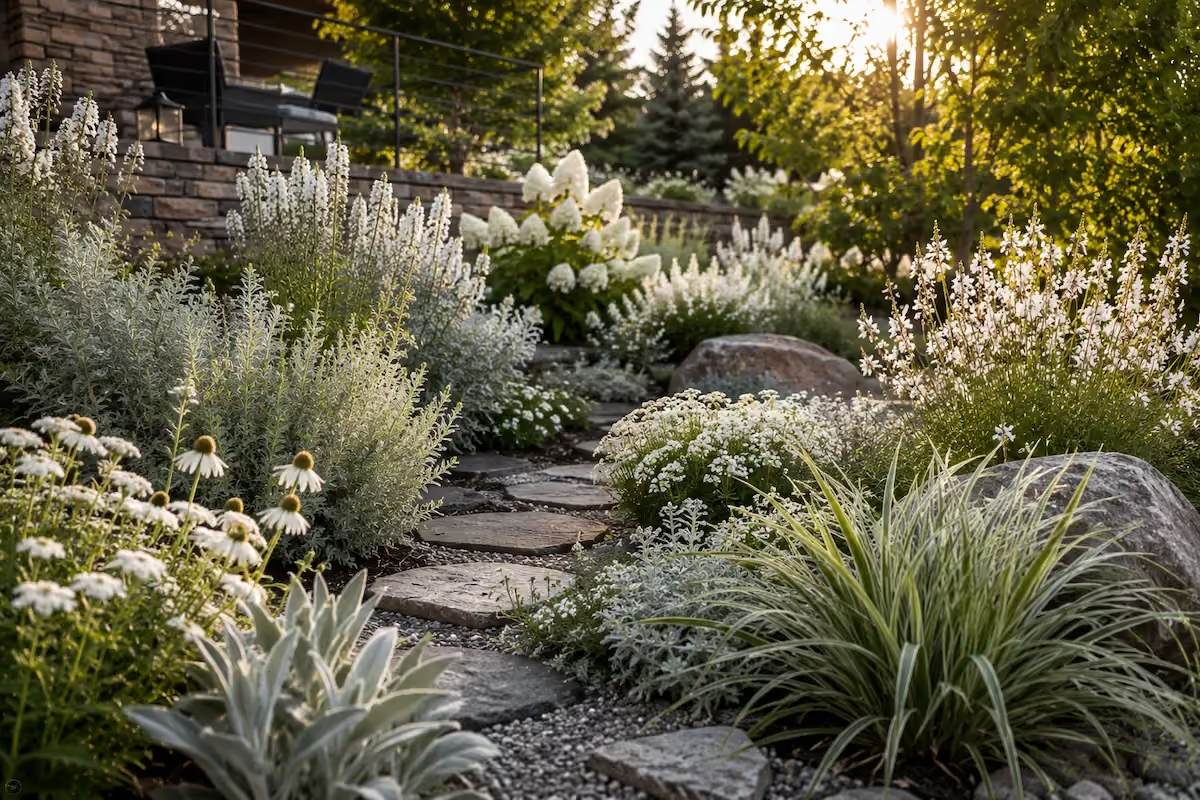

A garden does not need every color to feel rich. Sometimes the most striking outdoor spaces use just one. A monochrome garden built around a single color palette creates calm, focus, and a sense of intention that mixed beds rarely match. In this guide, you'll learn what a monochrome garden is, which colors and Colorado-adapted plants to choose, and how to design one that holds up on the Front Range. Restraint, it turns out, is its own kind of drama.


Lorem ipsum dolor sit amet, consectetur adipiscing elit. Suspendisse varius enim in eros elementum tristique. Duis cursus, mi quis viverra ornare, eros dolor interdum nulla, ut commodo diam libero vitae erat. Aenean faucibus nibh et justo cursus id rutrum lorem imperdiet. Nunc ut sem vitae risus tristique posuere.
A garden does not need every color to feel rich. Sometimes the most striking outdoor spaces use just one.
A monochrome garden built around a single color palette creates calm, focus, and a sense of intention that mixed beds rarely match. In this guide, you will learn what a monochrome garden is, why a single color palette works so well, which colors and Colorado-adapted plants to choose, and how to design one that holds up on the Front Range. Restraint, it turns out, is its own kind of drama.
A monochrome garden is a planting designed so that one color stands out above all others. The famous White Garden at Sissinghurst, created by Vita Sackville-West, made the idea world-famous and still draws visitors today.
The important detail is that a monochrome garden rarely uses a single exact hue. Instead, it draws on one color family. A purple garden might run from pale lavender to a deep, near-black violet. A yellow garden can move from soft butter tones to rich gold.
No garden is ever truly one color. Green foliage forms the underlying fabric that ties everything together. Within that frame, variations of shade and intensity give the design depth and keep it from feeling flat.
Restraint is the secret. When you remove color competition, the eye starts to notice everything else. Texture, leaf shape, plant form, and the play of light all step forward.
A limited palette also creates a clear mood. Cool colors such as blue, violet, and white feel calm and serene. They appear to recede, which makes a space feel larger. Warm colors like red, orange, and yellow feel lively and energetic, and tend to make a space feel more intimate.
This focus is why designers and serious plant lovers return to the idea again and again. A single color helps you concentrate on the relationships between plants rather than a scattershot of blooms.
Picking the right color sets the tone for the whole space. Use this quick reference to match a palette to the feeling you want.
Color family
Mood and effect
Example range
White
Elegant, serene, glows at dusk
Pure white to cream and silver foliage
Blue and violet
Calm, cool, makes space feel larger
Periwinkle to lavender to deep midnight
Yellow
Warm, cheerful, energizing
Pale butter to deep gold
Red and pink
Bold, intimate, dramatic
Soft pink to scarlet to maroon
Green
Restful, textural, four-season
Foliage tones from lime to deep evergreen
White is the most forgiving choice and the best place to start. It pairs with almost any home, and it stays visible in the evening when other colors fade into the dark.
The Front Range rewards plants that handle our dry, sunny, wind-prone climate. The good news is that water-wise Colorado plants come in nearly every color family. Here are reliable options grouped by palette.
A successful single-color garden takes a little planning. Follow these steps for a result that feels intentional rather than sparse.
A few principles separate a striking monochrome garden from a dull one. Keep these in mind as you plant.
A monochrome garden proves that less can be more. By limiting the palette to a single color family, you shift attention to texture, form, and light, and you create a space with a clear and lasting mood. White brings serenity, blue feels cool and expansive, and yellow lifts the spirits. Whatever you choose, green foliage anchors it all.
If a monochrome design appeals to you, start by picking a color and a spot you can frame or enclose. Then build a plant list from water-wise species suited to the Front Range. Pulling a single-color garden together takes a designer's eye for shade, texture, and bloom timing. Our team designs and installs themed planting schemes across Boulder County.
Ready to design a garden around your favorite color? Call Green Landscape Solutions at (720) 468-0987 or visit greenlandscapellc.com to schedule a consultation.
