
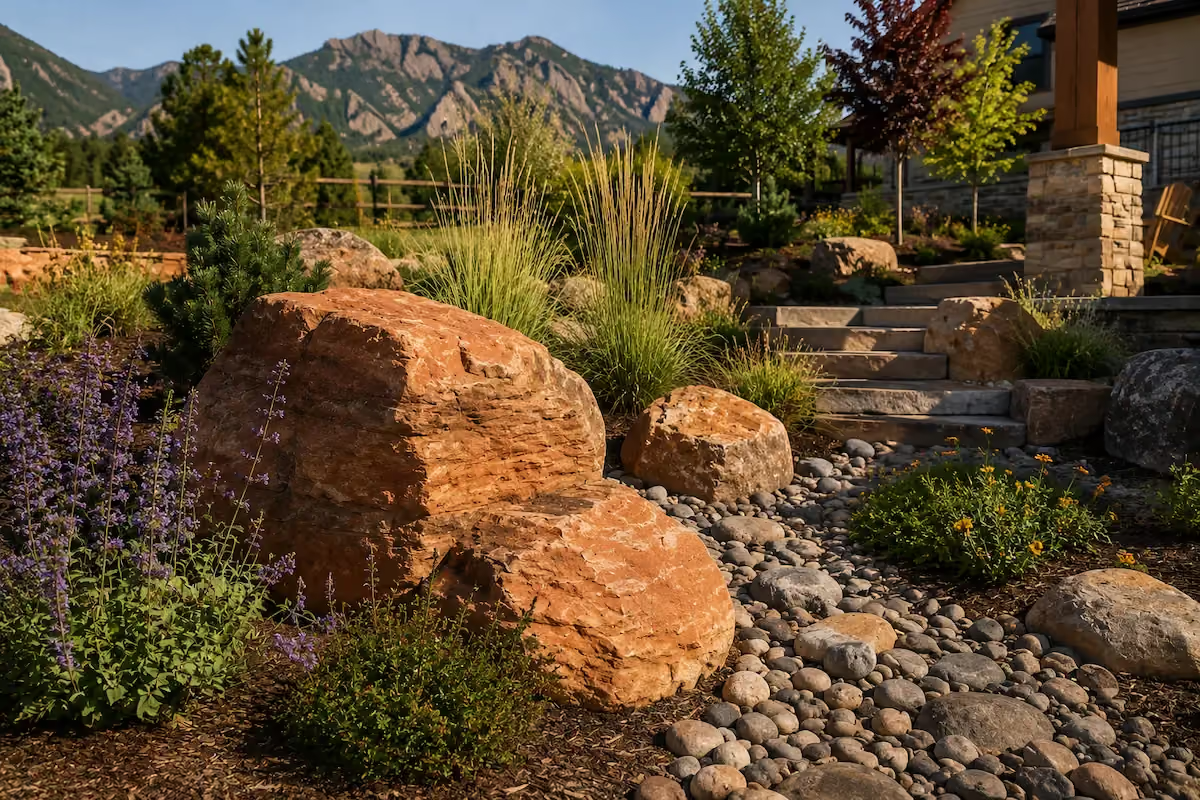
A single well-placed boulder can do more for a Colorado yard than a truckload of plants. Native stone anchors a design, controls runoff, and connects a property to the Front Range foothills around it. Here's how to choose the right stone, place it well, and why local rock outlasts almost everything else in our climate.


Lorem ipsum dolor sit amet, consectetur adipiscing elit. Suspendisse varius enim in eros elementum tristique. Duis cursus, mi quis viverra ornare, eros dolor interdum nulla, ut commodo diam libero vitae erat. Aenean faucibus nibh et justo cursus id rutrum lorem imperdiet. Nunc ut sem vitae risus tristique posuere.
A single well-placed boulder can do more for a Colorado yard than a truckload of plants. Native stone anchors a design, controls runoff, and ties a property to the Front Range foothills around it. In this guide, you will learn how designing with boulders works in Colorado, which native stone types perform best here, how to place and size them, and why local rock outlasts almost everything else in our climate. Boulders are not just decoration. They are structure, and they last for decades.
Boulders solve problems that plants cannot. They hold soil on a slope, redirect snowmelt, and give a yard permanent shape through every season. When perennials die back in winter, the stone keeps the design looking intentional.
The Front Range is a hard place to garden. We deal with freeze-thaw cycles, intense high-altitude UV, dry shade, strong winds, and alkaline clay soils. Native stone formed under these exact conditions over millions of years. That history is why it holds up when imported materials flake, fade, or crack.
Boulders also support water-wise design. Paired with gravel and drought-tolerant plants, they reduce irrigation needs and fit naturally into xeriscape layouts. A boulder asks for nothing once it is set. No water, no trimming, no fertilizer.
Choosing the right stone starts with knowing what our region offers. The Front Range produces several distinct types, each with its own color and use.
Lyons Red is quarried from the formation that runs from Lyons through the Flatirons down to Garden of the Gods. It carries deep red and pink tones. Despite the soft reputation of sandstone, Lyons Red is roughly 98 percent quartz with a silica bond, which makes it dense and durable.
Colorado Buff is a younger sandstone quarried west of Loveland and Fort Collins. It runs in neutral tans, browns, and grays. Its warm color blends easily with most Colorado homes and complements native plantings.
Moss rock is a favorite for focal points and dry-stack walls. Lichen and moss already grow on its surface, so it looks like it has been in place for centuries the day it arrives. Pulled from Colorado quarries, it suits rustic and naturalistic designs.
Granite boulders, often carrying natural lichen, create authentic foothills character. They work well for focal points, terraced gardens, and erosion control, and they handle our weather with ease.
Placement separates a designed landscape from a pile of rocks. Follow these steps for a natural result.
Native stone delivers more than good looks. The advantages stack up over the life of a yard.
A few errors undo the natural look. Setting boulders fully on top of the soil makes them look dropped rather than rooted. Lining up stones in neat rows kills the organic feel. Mixing stone types from different regions creates a disjointed palette. And ignoring grade and drainage can send water where you do not want it. Thoughtful placement avoids all of these.
Boulders give a Colorado landscape something few other materials can: permanence. They control water, anchor a design, and connect a property to the foothills that surround it. Native stone like Lyons Red, Colorado Buff, moss rock, and granite has spent millions of years adapting to our climate, which is exactly why it outlasts imported alternatives.
If you are planning a project, start by walking your yard and noting where structure is missing. Decide which focal points need anchoring, then choose local stone that matches your home. Setting boulders well takes the right equipment and an eye for natural arrangement. Our team designs and installs stone features across Boulder County every season.
Ready to bring native stone into your landscape? Call Green Landscape Solutions at (720) 468-0987 or visit greenlandscapellc.com to schedule a consultation.
