
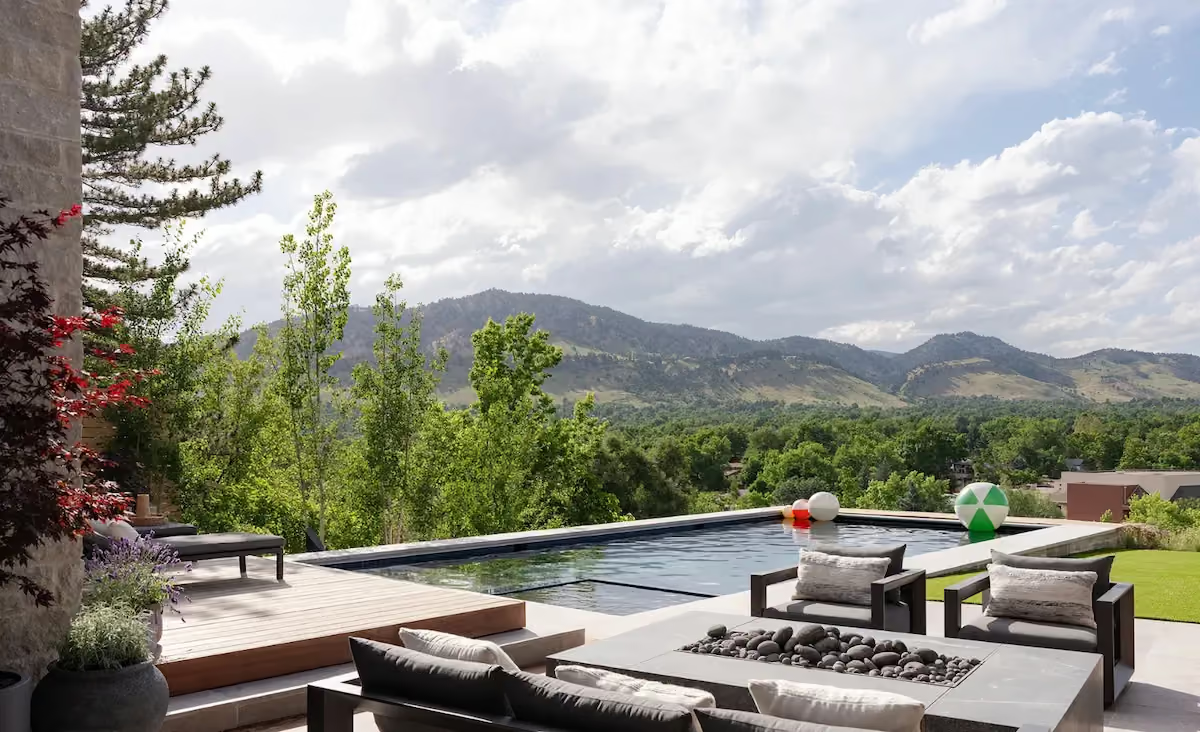

Cramscaping: densely planting with no bare soil visible, creates lush gardens that thrive in Boulder's semi-arid climate. By layering plants from groundcover to canopy, you'll build a self-sustaining ecosystem that needs less water and maintenance than traditional spaced plantings.


Lorem ipsum dolor sit amet, consectetur adipiscing elit. Suspendisse varius enim in eros elementum tristique. Duis cursus, mi quis viverra ornare, eros dolor interdum nulla, ut commodo diam libero vitae erat. Aenean faucibus nibh et justo cursus id rutrum lorem imperdiet. Nunc ut sem vitae risus tristique posuere.
Cramscaping fills every inch of garden space with carefully chosen plants that work together. Instead of mulch between widely spaced plants, you create living layers where plants shade the soil, retain moisture, and suppress weeds naturally.
Key principles:
Sun exposure - Track sun patterns throughout the day. South-facing Boulder gardens get intense afternoon sun, while north sides may stay shaded.
Soil type - Most Boulder properties have clay soil. Do a drainage test: dig a 12-inch hole, fill with water, and time how long it takes to drain. More than 4 hours means you'll need excellent drainage plants.
Microclimates - Note where snow lingers, where wind hits hardest, and where water naturally collects. These zones need different plant choices.
Ground layer (0-6 inches)
Low layer (6-18 inches)
Mid layer (18-36 inches)
Tall layer (3-6 feet)
For true cramscaping density:
Example: A 10x10 foot bed needs roughly:
Remove existing vegetation - Don't till our clay soil. Instead, smother grass with cardboard and 3 inches of compost for 2 months before planting.
Minimal soil amendment - Add only ~2 inches of compost.
Create planting pockets - Dig holes just slightly larger than root balls.
Create repetition - Repeat key plants throughout for cohesion. Use odd numbers (3, 5, 7) for natural look.
Consider bloom times - Plan for succession. When spring bloomers fade, summer plants should be ready.
Mix root depths - Combine deep-rooted plants with shallow spreaders to use all soil layers efficiently.
Leave some flexibility - Keep 10% space for additions, seasonal annuals, or plants that need dividing.
Week 1-2: Water daily if no rain Week 3-4: Water every other day Month 2-3: Water twice weekly Month 4+: Water weekly, adjusting for rainfall
Critical tip: Water deeply to encourage deep roots. Shallow daily watering creates weak plants.
Spring (April): Cut back dead growth, divide overgrown plants Summer (June-August): Deadhead for extended blooms, watch for gaps to fill Fall (September): Plant new additions, reduce watering Winter: Leave seedheads for birds, trim only damaged growth
By year three, your cramscape should:
Cramscaping works with nature to create resilient, beautiful gardens. By understanding Boulder's unique conditions and choosing appropriate plants, you'll build a landscape that gets better each year.
Whether starting fresh or converting existing beds, cramscaping offers Boulder gardeners a sustainable path to the lush gardens we all want—without the constant maintenance or water waste.
Cramscaping fills every inch of garden space with carefully chosen plants that work together. Instead of mulch between widely spaced plants, you create living layers where plants shade the soil, retain moisture, and suppress weeds naturally.
For true cramscaping density: groundcovers at 1 per square foot, small perennials at 1 per 2 square feet, medium perennials at 1 per 4 square feet, and shrubs based on mature width overlapping by 25%. A 10x10 foot bed needs roughly 40-50 groundcovers, 20-25 small perennials, 8-10 medium perennials, and 2-3 anchor shrubs.
Don't till clay soil. Instead, smother existing grass with cardboard and 3 inches of compost for 2 months before planting. Add only about 2 inches of compost and dig planting pockets just slightly larger than root balls.
Week 1-2: Water daily if no rain. Week 3-4: Every other day. Month 2-3: Twice weekly. Month 4 onward: Weekly, adjusting for rainfall. Water deeply to encourage deep roots—shallow daily watering creates weak plants.
By year three, a mature cramscape should need watering only during extreme drought, suppress weeds naturally, attract abundant pollinators, require only seasonal maintenance, and look full and lush year-round.
